
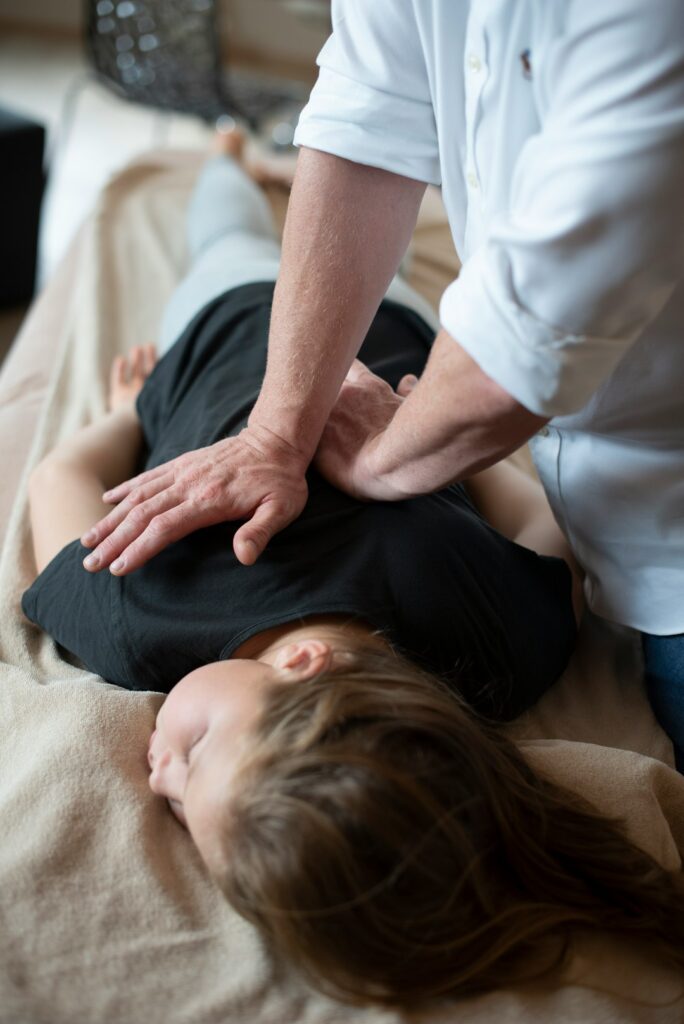
Scoliosis is a sideways and rotational curve of the spine. It can range from a mild finding that only needs observation to a more significant condition requiring bracing, specialized exercise, or surgery. Chiropractic care may help some people manage related pain or stiffness, but current evidence does not show that spinal adjustments straighten a scoliosis curve or reliably prevent it from progressing.
What is scoliosis?
Scoliosis is more than poor posture. A person with scoliosis has a three-dimensional spinal curve that may cause uneven shoulders, a prominent shoulder blade, an uneven waist, or one side of the rib cage to appear more noticeable when bending forward.
The condition can begin during childhood or adolescence, but adults may also develop or experience worsening symptoms from age-related changes, arthritis, disc degeneration, or an existing curve that becomes more symptomatic over time.
Some people have no symptoms. Others may notice:
- Back or neck discomfort
- Muscle fatigue after standing or sitting
- Uneven posture
- Reduced flexibility
- Pain that travels into the buttock or leg
- Numbness, tingling, or weakness when nerves are irritated
A visible difference in posture does not always mean that the curve is worsening. Proper evaluation generally involves a physical examination and, when appropriate, standing spinal X-rays to measure the curve and assess alignment.
Can chiropractic care correct scoliosis?
No reliable evidence shows that chiropractic adjustments can permanently straighten a structural scoliosis curve. Adjustments may change joint motion, muscle tension, or a person’s sense of discomfort, but those short-term effects should not be confused with correcting the underlying shape of the spine.
This distinction matters particularly for growing children and teenagers. A curve that is progressing during growth requires monitoring through an appropriate medical plan. Depending on the child’s age, skeletal maturity, curve size, and rate of change, that plan may involve observation, bracing, scoliosis-specific exercises, or surgery.
Chiropractic treatment should not replace recommended imaging, orthopedic evaluation, bracing, or follow-up examinations.
What symptoms might chiropractic treatment help?
For some adults, carefully selected manual therapy may provide temporary relief from muscle tightness or mechanical back pain occurring alongside scoliosis. Gentle mobilization, soft-tissue work, movement instruction, and strengthening may help improve comfort and function.
The possible goal is symptom management rather than curve correction. For example, a person with an established curve may also have:
- Stiff hip joints
- Weak abdominal or back muscles
- Irritated facet joints
- Muscle overuse from an uneven posture
- Pain related to prolonged sitting or standing
In those situations, a broader rehabilitation approach may be more useful than repeated adjustments alone. Exercise, flexibility work, walking, and gradual strengthening can support daily function. A physical therapist with training in scoliosis-specific rehabilitation may be particularly helpful when the objective is to improve posture, breathing mechanics, muscular balance, or movement control.
Is chiropractic care safe for someone with scoliosis?
Safety depends on the type of scoliosis, the person’s age, symptoms, medical history, bone health, and the techniques used. Not every patient with a spinal curve is an appropriate candidate for forceful manipulation.
Extra caution is needed when there is:
- Severe or rapidly increasing pain
- Numbness, weakness, or loss of coordination
- Pain extending below the knee
- Osteoporosis or a history of fractures
- Recent spinal surgery
- Significant arthritis or spinal instability
- A congenital spinal abnormality
- Fever, unexplained weight loss, or a history of cancer

A thorough health history and examination should come before treatment. If the cause of the curve is uncertain, or if neurological symptoms are present, medical assessment takes priority.
New loss of bladder or bowel control, rapidly progressing weakness, numbness in the groin area, or severe pain after an injury requires urgent medical attention rather than routine manual care.
What treatments have stronger evidence?
Treatment depends on whether scoliosis is mild, progressive, painful, or associated with nerve compression.
For many people with mild adult scoliosis and manageable symptoms, non-surgical care may include exercise, activity modification, pain medication when appropriate, and periodic observation. Short-term bracing may sometimes help adults with pain, although it is not generally used to permanently correct an adult curve.
For growing adolescents with moderate curves, bracing has evidence for reducing the risk of progression. Scoliosis-specific exercise programs may also be used, often alongside bracing and regular monitoring. Larger or progressive curves may require evaluation by a spine specialist to discuss surgical options.
The right treatment is based on measurements and progression over time, not solely on how uneven the back appears.
How should families approach scoliosis in Rockville Centre?
In a dense suburban community, children and adults may spend long periods sitting for school, commuting, desk work, or screen use. These habits can aggravate stiffness and make an existing curve more noticeable, but sitting posture does not usually cause structural scoliosis.
Seasonal changes can also affect symptoms. Cold weather may lead some people to move less, while snow, ice, or damp conditions can make walking and outdoor exercise less appealing. Maintaining safe indoor activity, changing positions regularly, and avoiding long uninterrupted periods of sitting may reduce muscular discomfort without treating the curve itself.
Parents who notice uneven shoulders, a tilted waist, clothing that hangs unevenly, or a rib prominence should arrange an appropriate evaluation rather than relying on visual observation alone. Adults with new pain, progressive posture changes, or leg symptoms also benefit from assessment before beginning a treatment program.
What questions should be asked before treatment?
A patient or parent can reasonably ask:
- Is the curve structural, functional, or still uncertain?
- Has the curve been measured with appropriate imaging?
- Is it stable or changing?
- What is the specific goal of treatment: pain relief, mobility, strength, or curve control?
- Could this treatment interfere with bracing or another recommended plan?
- What symptoms would require medical reassessment?
- Are exercises or physical therapy appropriate?
- How will progress be measured?
A responsible plan should explain what chiropractic care can and cannot do. Claims that adjustments can “realign” or permanently eliminate scoliosis are not consistent with current evidence.
For many residents, the most practical approach is coordinated care: accurate diagnosis, appropriate monitoring, exercise or rehabilitation for function, and symptom-focused treatment when it is safe. Chiropractic care may have a limited role in managing discomfort for selected patients, but it should be viewed as one possible component of care—not a replacement for scoliosis evaluation or evidence-based treatment.
