

Balance problems can feel like dizziness, unsteadiness, drifting while walking, or a fear of falling. Spinal alignment may influence balance by affecting posture, joint movement, muscle coordination, and the body’s awareness of position—but it is only one part of a much larger balance system.
How does the spine contribute to balance?
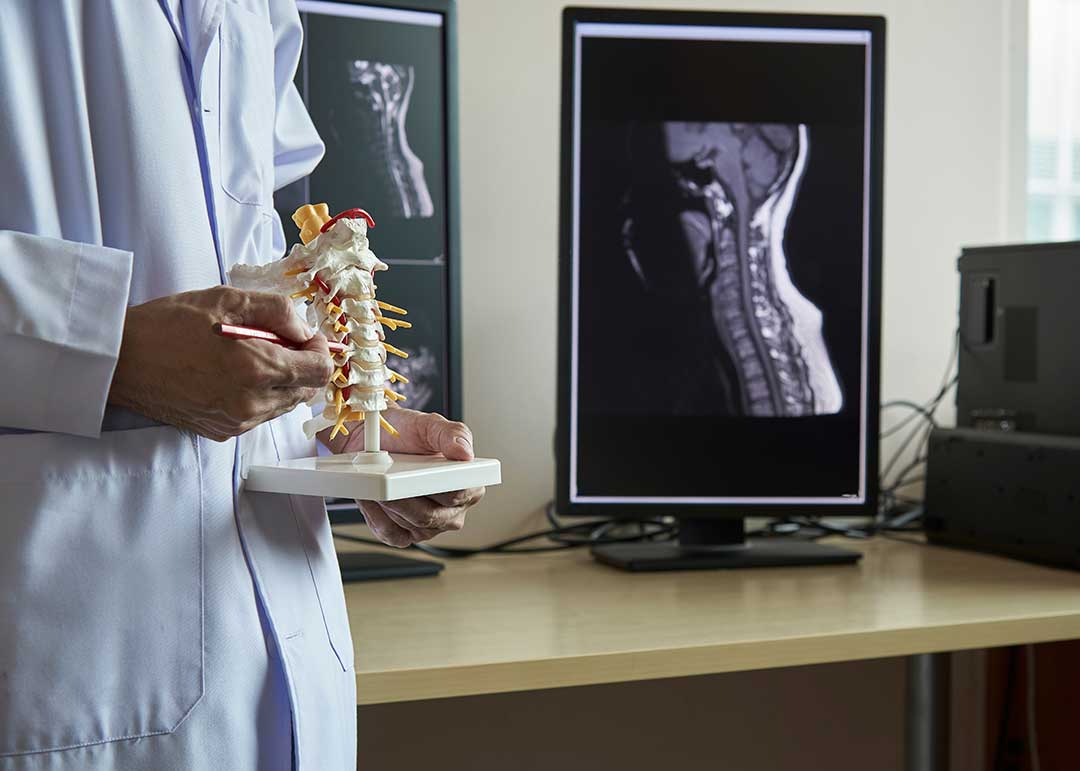
The spine helps position the head over the pelvis and provides a stable foundation for movement. Sensors in the neck, back, hips, legs, and feet send information to the brain about body position and motion. This information is called proprioception.
The brain combines those signals with input from the eyes and inner ears. The inner-ear vestibular system detects head movement and the direction of gravity, while vision helps the brain judge orientation and movement around the body. Together, these systems help a person stand upright, walk, turn, and recover from a misstep. ([nidcd.nih.gov](https://www.nidcd.nih.gov/health/balance-disorders?utm_source=openai))
If the spine or surrounding muscles become painful, stiff, or poorly coordinated, a person may change the way they hold the head, shoulders, pelvis, or legs. That altered movement pattern can make balance tasks more difficult, especially when walking on uneven ground, turning quickly, or standing in low light.
This does not necessarily mean that a vertebra is “out of place.” In everyday clinical language, spinal alignment often refers to posture, joint motion, muscle balance, and movement control rather than a bone being visibly displaced.
Can poor spinal alignment directly cause dizziness?
Usually, dizziness should not automatically be blamed on spinal alignment. Vertigo and balance problems can result from inner-ear disorders, medication effects, blood-pressure changes, head injury, neurological conditions, vision problems, dehydration, or other medical issues. Some conditions begin suddenly without an obvious cause. ([nidcd.nih.gov](https://www.nidcd.nih.gov/health/balance-disorders?utm_source=openai))
Neck position and neck pain can sometimes contribute to a sensation of unsteadiness or altered spatial awareness because the brain receives position signals from muscles and joints in the cervical region. However, so-called cervicogenic dizziness remains a diagnosis that requires careful evaluation, particularly because symptoms can overlap with vestibular, neurological, and cardiovascular problems. ([pmc.ncbi.nlm.nih.gov](https://pmc.ncbi.nlm.nih.gov/articles/PMC9655761/?utm_source=openai))
A useful distinction is:
- Imbalance: feeling unsteady, veering, or having trouble walking.
- Vertigo: a spinning or rotational sensation.
- Lightheadedness: feeling faint or as if one may pass out.
- Visual disorientation: difficulty feeling stable in busy environments or while moving the head.
Spinal and postural factors may be relevant to some cases of imbalance, but they are not a universal explanation for all four experiences.
What posture-related patterns may affect steadiness?
Several common patterns can make balance more demanding:
- A forward-head posture that keeps the head positioned ahead of the trunk.
- Stiffness in the upper back or neck that limits comfortable head movement.
- Weakness or fatigue in the hips, legs, or trunk.
- Uneven weight-bearing between the right and left sides.
- Guarded movement after an injury.
- Reduced ankle or hip mobility, which limits the ability to correct a loss of balance.
These patterns may be more noticeable during ordinary activities such as looking over a shoulder, stepping off a curb, carrying groceries, or walking outdoors after rain or snow. Seasonal wet surfaces and winter footwear can add an external challenge, but they do not explain persistent dizziness or repeated falls.
Postural changes can also work in both directions. A vestibular problem may cause a person to stiffen the neck, widen the stance, or avoid turning the head. Over time, those protective strategies may create additional neck and back tension. In that situation, the spinal symptoms may be a response to the balance disorder rather than its original cause.
Can chiropractic care help with balance problems?
Chiropractic assessment may be useful for identifying musculoskeletal contributors such as painful neck motion, restricted spinal movement, or impaired coordination. Gentle mobility work, posture education, strengthening, and balance exercises may be included when appropriate.
The limits are equally important: spinal manipulation is not a general treatment for every cause of dizziness, and it should not replace evaluation for an inner-ear, neurological, cardiovascular, medication-related, or vision-related problem. Balance disorders often require more than one type of assessment. The National Institute on Deafness and Other Communication Disorders notes that evaluation may involve medical history, hearing or vestibular testing, eye-movement testing, imaging, or postural assessment depending on the symptoms. ([nidcd.nih.gov](https://www.nidcd.nih.gov/health/balance-disorders?utm_source=openai))
Neck manipulation also deserves particular caution in someone with unexplained dizziness, severe headache, neurological symptoms, recent trauma, or significant vascular risk. Treatment choices should be based on the person’s history and examination rather than on the assumption that alignment is the primary cause.
What can residents do safely at home?
For mild, occasional unsteadiness without warning signs, practical steps can reduce risk while the cause is being clarified:
- Keep walkways and stairs well lit and free of loose objects.
- Use handrails, especially when carrying items or moving between levels.
- Avoid walking on wet or icy surfaces when symptoms are active.
- Rise slowly from a chair or bed if standing causes lightheadedness.
- Wear supportive, low-heeled footwear.
- Notice whether symptoms are triggered by rolling in bed, looking up, turning the head, exertion, meals, or a medication change.
- Avoid repeatedly testing dizziness by making sudden neck movements.
- Record whether symptoms involve spinning, faintness, imbalance, hearing changes, headache, weakness, or vision changes.
Balance exercises can be helpful for some people, but exercises should match the cause. Vestibular rehabilitation, for example, is designed for particular inner-ear and sensory-integration problems; general stretching alone may not address those conditions. ([nidcd.nih.gov](https://www.nidcd.nih.gov/health/balance-disorders?utm_source=openai))
When is a balance problem urgent?
A new or severe balance problem needs prompt medical attention, especially when it begins suddenly or is accompanied by:
- Weakness or numbness on one side.
- Trouble speaking, confusion, or a severe new headache.
- Fainting, chest pain, or significant shortness of breath.
- Double vision or sudden vision loss.
- Inability to walk safely.
- Repeated vomiting.
- A recent head or neck injury.
- New hearing loss or intense vertigo.
Stroke and other urgent conditions can sometimes resemble a routine dizziness episode, so sudden neurological changes should not be attributed to posture or spinal alignment. NIH guidance also recommends having persistent, severe, or unusual balance symptoms evaluated rather than ignoring them. ([newsinhealth.nih.gov](https://newsinhealth.nih.gov/2021/11/dealing-dizziness?utm_source=openai))
For local residents, the most practical approach is to treat spinal alignment as one possible contributor within a whole-body balance system. The inner ears, eyes, brain, joints, muscles, medications, circulation, and environment may all matter. A careful history that describes exactly what “dizzy” or “off balance” feels like is often more useful than assuming the spine is either entirely responsible or irrelevant.
